


Selling a Home As-Is on the Central Coast: Pros, Cons, and Risks
- Joesef Jackson

- Feb 13
- 3 min read
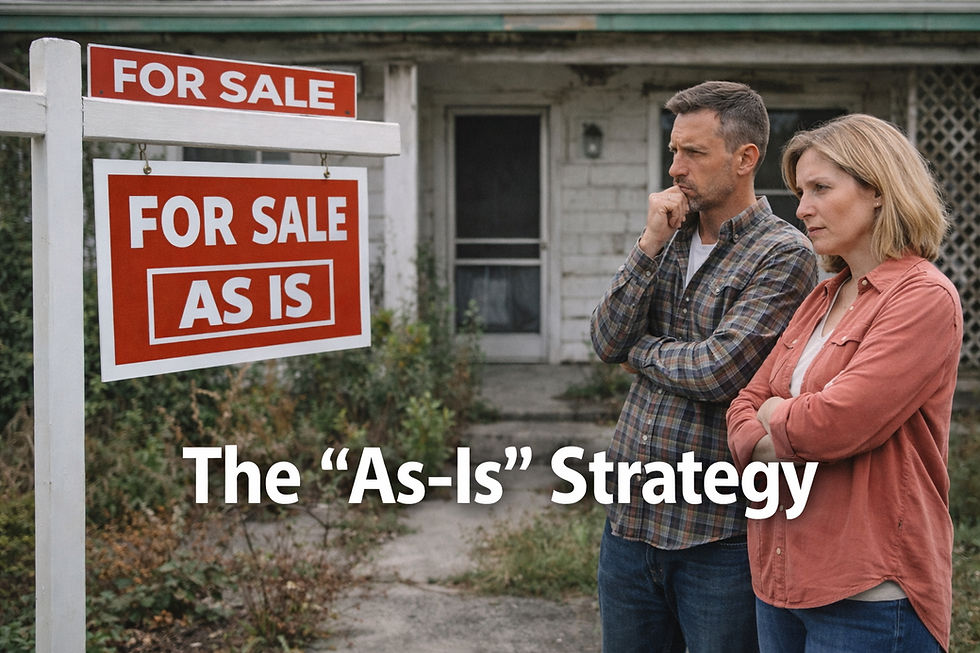
Selling a home as-is on the Central Coast can feel like a shortcut—but it’s a strategy that carries very real tradeoffs. In San Luis Obispo County, where buyer expectations, inspection standards, and pricing sensitivity vary widely by neighborhood, selling as-is can either simplify your sale or quietly reduce your leverage.
This guide breaks down when selling as-is makes sense, when it doesn’t, and the risks sellers should understand before choosing this path.
What “As-Is” Really Means on the Central Coast
Selling a home as-is means the seller does not intend to make repairs or offer credits after inspections. However, it does not mean:
You can hide known defects
Buyers waive inspections automatically
Price becomes irrelevant
Disclosure laws in California still apply, and buyers will still factor condition into their offers.
The Pros of Selling a Home As-Is
1. Fewer Repair Negotiations
As-is listings often reduce back-and-forth after inspections. Buyers enter knowing repairs are unlikely, which can simplify escrow for sellers who want certainty.
2. Faster Prep Time
For homes that need work, selling as-is avoids weeks of repairs, contractor scheduling, and upfront cash outlays—especially helpful for inherited properties or long-held homes.
3. Appeal to Certain Buyer Segments
Investors, cash buyers, and renovation-focused buyers actively look for as-is opportunities—particularly in older Central Coast neighborhoods.
👉 Investing in Real Estate on the Central Coast: Primary, Second Home, and Rental Options
The Cons Sellers Need to Weigh Carefully

1. Smaller Buyer Pool
Most retail buyers prefer move-in-ready homes. Selling as-is immediately narrows demand, especially in higher price ranges or family-oriented areas.
2. Pricing Pressure
Buyers expect a discount for risk. Even minor issues can feel “bigger” when sellers won’t address them, pushing offers lower than anticipated.
3. Tougher Appraisals and Financing
As-is homes can struggle with FHA, VA, or conventional financing if condition issues affect habitability—limiting buyer options further.
The Biggest Risks of Selling As-Is

1. Overestimating the “Savings”
Skipping repairs doesn’t always save money. Buyers often demand more than the actual repair cost to compensate for inconvenience and uncertainty.
2. Inspections Still Matter
Even as-is buyers inspect. The difference is that unfavorable reports can:
Kill deals
Lead to large price demands
Force relisting with a stigma
When Selling As-Is Does Make Sense
Selling as-is may be the right move when:
The home needs major work
The seller prioritizes speed or simplicity
Pricing is aggressive and realistic
The target buyer is clearly defined
In these cases, as-is can be a strategic positioning choice, not a compromise.
When It Usually Doesn’t
Selling as-is is often a mistake when:
Issues are cosmetic and inexpensive to fix
The market favors move-in-ready homes
Pricing expectations are high
Financing limitations will restrict buyers
👉 How Market Conditions Affect Home Values on the Central Coast
Bottom Line for Central Coast Sellers
Selling a home as-is is neither good nor bad by default—it’s context-dependent. The success of an as-is sale hinges on pricing accuracy, buyer targeting, and risk awareness.
If you’re considering selling as-is and want to understand how it would affect your price, timeline, and negotiation leverage, contact me. I’ll help you evaluate whether as-is is a smart strategy for your specific Central Coast property—or if a different approach would protect more of your value.
Some plain-text references will become live links as additional Central Coast, San Luis Obispo County, and city-specific real estate guides are published.


Comments